
Top Technology Trends 2026: AI, Robotics, Cloud 3.0 & Future Innovation
Explore the top technology trends 2026 including AI, robotics, cloud evolution, edge computing, and connectivity shaping the best future of tech for all of us.
TECH
AQEEL
1/16/20267 min read
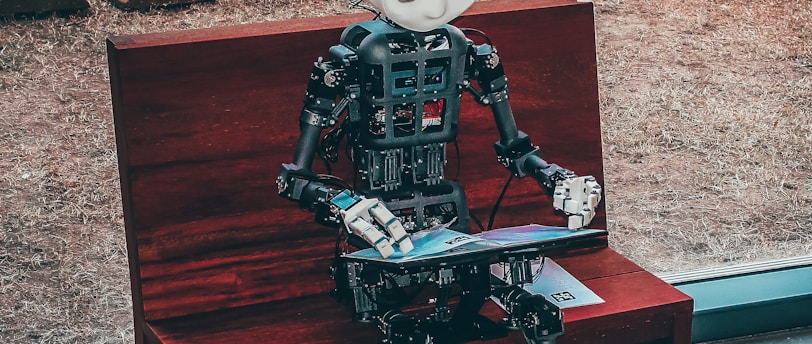

Agentic AI and Multi-Agent Systems
Agentic AI is a new generation of AI that transcends conventional chatbots and assistants, evolving into entities with the capacity to plan, decide, and act on their own. Rather than the reactive AI that interacts with a user, agentic AI agents are goal-orientated. They are able to decompose complex goals into smaller tasks, select appropriate tools, collaborate with other AI agents, and perform workflows with little human involvement.
In 2026, enterprises are anticipated to be running multi-agent systems, where several AI agents work together as a digital workforce. For instance, a single agent can take care of customer interaction, another analyzes the data, and a third is responsible for scheduling or reporting. These agents interact, share context, and evolve in real-time as the environment changes.
The enterprise impact of this transition will be massive. Departments like customer support, marketing, accounting, and logistics will reap the benefits of automated decision-making and ever-flowing optimization. Agentic AI can track KPIs, identify problems, and may even propose or implement fixes without seeking human consent.
But that autonomy brings increased demands for oversight and governance, as well. Enterprises will concentrate on establishing precise boundaries and rights, as well as maintaining trails of audits to keep AI actions continually in step with the business and ethical principles. In summary, agentic AI represents one of the most transformative long-duration technology trends for 2026, changing how humans and machines collaborate at scale.
Cloud 3.0: The Evolution of Cloud Computing
Cloud computing is evolving into a new stage / generation becoming Cloud 3.0, tailored for AI-based workloads and intelligent systems. Traditional cloud architectures were centered on central storage and application hosting, whereas Cloud 3.0 is about real-time execution, processing across the intelligence continuum, and data sovereignty.
Hybrid and multi-cloud architectures, which blend public clouds, private infrastructure, and edge environments, will be increasingly deployed by enterprises in 2026. The method means firms can run AI models closer to the points where they gather data without relinquishing control over sensitive data. Cloud 3.0 platforms are designed to deliver faster AI training, inference and serving.
Security and compliance are important drivers as well. “There are increasing regulations with respect to data privacy, and companies are increasingly desiring to have more visibility into where their data resides, and how it’s used. Cloud 3.0 leverages sophisticated governance, encryption, and regional data controls to support these needs.
For enterprises, the value is considerable. Shorter innovation cycles, scalable AI services, lower latency, and greater reliability make Cloud 3.0 a building block for digital transformation. These intelligent cloud systems will be relied on heavily by such industries as finance, healthcare, manufacturing, and e-commerce.
Cloud 3. 0 isn’t just an upgrade — it’s reimagining cloud platforms that think, evolve, and operate in real time.
Edge AI and Real-Time Intelligence
Edge AI is reshaping data processing by bringing intelligence closer to data sources. Edge AI allows these devices to process and make decisions over the data locally rather than blindly sending that data to centralized cloud servers. This reduces latency, brings better performance and more privacy.
With billions of connected devices producing real-time data, edge AI will become imperative in 2026. These include smart cameras, industrial sensors, autonomous vehicles and medical devices, all of which have to make decisions instantaneously. Edge AI enables these networks to continue to perform in areas where connectivity is weak or non existent.
Among the high speed benefits of edge AI. Standard, real-time processing results in timely responses, which is important for work flow in traffic monitoring, robotics, and predictive maintenance applications. Privacy is yet another, since sensitive information can stay on the device rather than being sent to the cloud.
In contrast to cloud computing, edge computing brings processing nearer to the source of data or its capture, which is particularly useful in the case of the huge volumes of data generated by the Internet of Things. For instance, factories employ edge AI to predict when machinery may break down, and healthcare devices keep track of patients around the clock, sending alerts to physicians in real time.
With better, more energy-efficient hardware, the capacities of edge AI will be further extended. Integrated with cloud infrastructure edge AI offers a decentralized and dynamic intellect that distributes, responds and recovers in the event of any gap or breach - serving as the backbone of future digital ecosystems.
Robotics and Autonomous Machines
Robotics will usher in a new era in 2026, with the advancement of artificial intelligence, computer vision and sensor technology. Today's robots aren't confined to repetitive tasks; they can be trained, they can learn, and they can work in dynamic environments with people.
Autonomous robots are also becoming widespread in warehouses, factories, hospitals, and public sites. Robots powered by AI can move in intricate spaces, identify objects and take decisions on-the-fly. These qualities make robots particularly suited for the logistics, manufacturing, healthcare, and service sectors.
One of the biggest factors, driving the adoption of robotics is the global labor shortage. Robots fill the void in repetitive, hazardous or physically taxing work. Autonomous robots perform sorting and delivery in warehouses. In healthcare, robots support patient care, surgery, and cleaning. Service robots are driving efficiencies and enhancing customer experiences in retail and hospitality.
Safety and collaboration are also getting better. Collaborative robots or cobots are intended to work in close proximity to human workers, rather than replacing the individuals altogether and boosting their productivity.
With costs coming down and capabilities going up, robotics will become available to small and medium sized companies. Rather than being a concept from a science fiction film, 2026 will be a year where robotics are very much the solution to, not the problem of, getting work done.
AI-Driven Health Tech & Wearables
Health tech is rapidly changing with AI-enabled wearables becoming intelligent health monitoring systems. Rather than simply counting steps or measuring heart rate, these gadgets will be tracking much more by 2026—they will be analyzing sophisticated health data in real-time and delivering actionable intelligence.
Sleep quality, stress, heart rhythm, blood oxygen, and metabolic markers can all be tracked with modern wearables. This information is then processed by AI algorithms to identify early-stage health conditions, allowing for preventive care instead of reactive treatment. That switch leads to lower costs of care and better outcomes over time.
In hospitals, AI-powered health technology already aids doctors in diagnosis and treatment decisions. Wearable data can be tied into healthcare systems, too, allowing doctors to have ongoing visibility into patients’ health between appointments. This is especially useful for chronic disease management.
Personalized wellness is yet another huge upside. It uses AI to personalize exercise, nutrition, and recovery recommendations based on the user’s unique data. With real-time feedback they can make better lifestyle decisions.
Privacy and data security continue to be paramount concerns, stimulating innovation in encrypted data storage and ethical AI use. As regulations take shape, trusted health tech platforms will see expansive growth. In 2026, health technology driven by AI will enable people, make healthcare more efficient and more focused on prevention and personalization.
Next-Gen Connectivity: 6G & Ultra-Low Latency Networks
While 5G is still rolling out globally, the exploration of 6G is already shaping the future of connectivity. Anticipated to appear in a few years, 6G will provide ultra-low latency, very high data rates, and artificial intelligence (AI)-centric network intelligence.
Early 6G research in 2026 will shape the design and optimization of networks for 2030. These future networks will be able to connect devices, machines, and systems on a scale and at a speed that allows real-time communication at an unprecedented level.
Ultra-low latency is crucial for autonomous transportation, remote surgery, industrial automation and immersive AR/VR. Leveraged resources that leverage AI networks will intelligently allocate resources to predict congestion and optimize performance.
6G also caters for the vision of the Internet of Everything (IoE) where smart cities, smart factories, smart vehicles and smart homes are all connected. In turn, this connectivity leads to intelligent infrastructure, energy efficiency, and cutting-edge public services.
While the actual widespread deployment of 6G is still many years away, these breakthrough innovations in 2026 will be forming the basis for the future. The companies that will win are the ones that start to get ready now, to do the things that will make the most of those ultra-fast, ultra-smart networks when they get here.
Intelligent Operations & AI Orchestration
# Humanized response
As organizations build out more AI systems, they face the challenge of effectively managing those. Intelligent operations involve the management of multiple AI models, data sources, and human workflows as one system.
Enterprises will leverage AI orchestration platforms to oversee performance and dependencies, and maintain reliability in 2026. These platforms manage the interaction of AI models, dynamically scale resources, and maximize results in real-time.
AI-driven insight also enhances decision making with human in the loop. For instance, AI analyzes trends and suggests what actions should be taken while humans make strategic decisions and are accountable. So this is a hybrid approach that kind of increases trust and also effectiveness.
Finance, supply chain, healthcare, and IT ops, to name a few, get a lot of value. Predictive analytics minimize downtime, automate incident responses and increase efficiency in material handling systems.
Transparency and explain ability are also very important. Well, I think for one, they need to be able to know why the AI system makes the decisions it does, especially in regulated industries. Intelligent operations solutions include dashboards, alerts and audit trails for compliance assurance.
In 2026, AI orchestration will be the linchpin for scaling AI responsibly — transforming isolated models into cohesive, enterprise-wide intelligence.
AI Governance & Ethical Technology
With the rise in capabilities and autonomy of AI, ethical use and governance are an essential. In 2026, Enterprises will pour investments in AI governance frameworks to become transparent, fair and accountable.
Now, according to recent news articles and analyses, the company is adding a new AI governance feature: enabling users to track model behavior, detect bias, manage data usage, and keep up with new regulations. These track AI decisions – and human decisions about AI – especially in high-stakes environments like hiring and healthcare, finance and surveillance.
Trust is a key driver of this trend. Users and clients need to be confident that AI systems are safe, unbiased, and privacy-respecting. Ethical AI practices help build brand reputation and mitigate potential legal and operational risks.
World governments are developing AI regulations, so governance solutions are critical for ensuring compliance. Organizations must track how AI models are trained, tested, and deployed, and how they are used responsibly.
Ethical AI is more than just compliance. The ethics, they're going to be more sustainable over the long term." Companies that emphasize human-centered design and responsible innovation will earn a competitive edge.
In 2026, AI governance will be fundamental to digital strategy, as organizations harness technological advancement in a manner conducive to societal values and public trust.